Qipao vs Cheongsam: What's the Difference?
Qipao and cheongsam are the same dress with two names, one from Mandarin and one from Cantonese. Here's where each name comes from, how the dress changed from 1920s Shanghai to 1960s Hong Kong, what to look for in the cut, and what men wear instead.
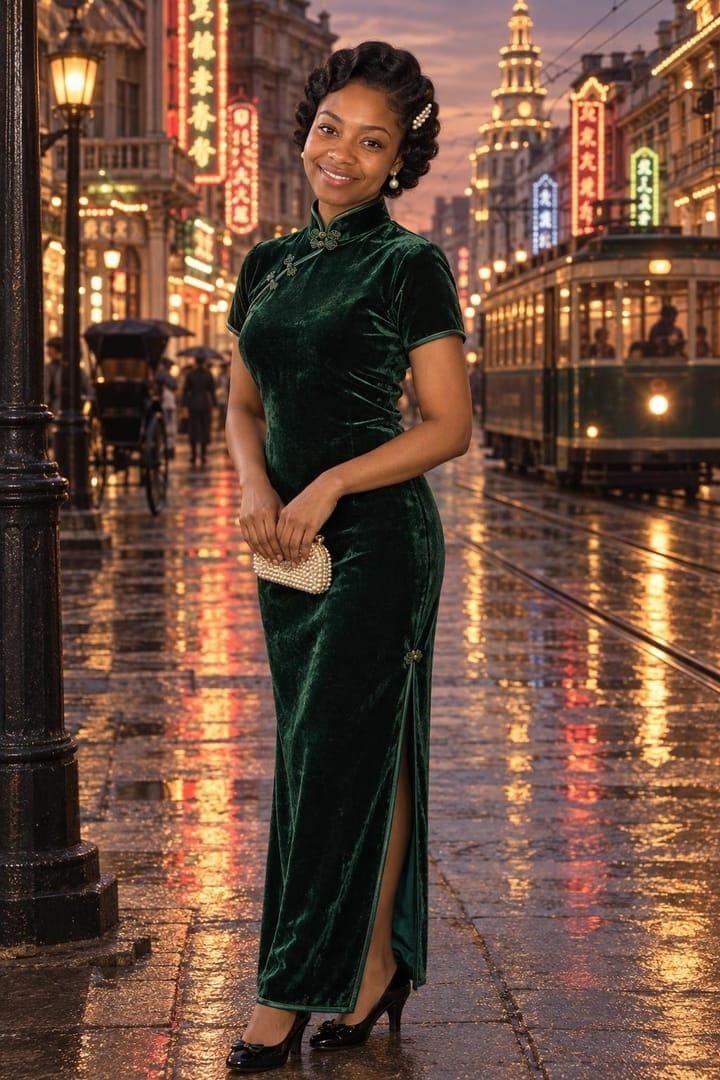
Short answer: they're the same dress. Qipao is the Mandarin name, used mostly in mainland China. Cheongsam is the Cantonese name, used in Hong Kong, Guangdong and much of the English-speaking world. Both mean the fitted, high-collared Chinese dress with frog buttons and side slits.
The longer answer is more interesting, because each name carries a different piece of the dress's history.
Qipao vs cheongsam in one paragraph: Qipao (旗袍) means "banner gown", after the Manchu "banner people" of the Qing dynasty, whose long robes inspired it. Cheongsam (長衫) is Cantonese for "long garment", the everyday name in Hong Kong, where the dress had its golden age in the 1950s and 60s. Same dress, two names: pick whichever your audience uses.
Where the name "qipao" comes from
In the Qing dynasty (1644–1912), the ruling Manchus were organised into military-administrative units called the Eight Banners, and Manchu people were known as "banner people" (qiren, 旗人). Manchu women wore long, loose, straight robes that covered the body from neck to ankle. Qipao literally means "banner gown".
The dress we call a qipao today is not that Qing robe, though. It took its modern shape in the 1920s, after the dynasty fell, when women in Shanghai and other cities adapted the long gown into something new.
Where the name "cheongsam" comes from
Cheongsam is the Cantonese pronunciation of 長衫, "long garment". In Hong Kong and Guangdong it became the usual word for the women's dress. Hong Kong was also where many Shanghai tailors moved after 1949, and where the dress stayed in everyday wear long after it had faded elsewhere, so the Cantonese name travelled into English.
One twist: in Mandarin, the same two characters are read changshan, and there they usually mean a man's long gown. Same characters, different garment, depending on the language.
So which word should you use?
- Talking to people from mainland China: qipao.
- Talking to people from Hong Kong, Singapore or Malaysia: cheongsam is very common, and Hong Kong people use both words interchangeably.
- Shopping online in English: sellers usually list both ("qipao cheongsam dress"), so search for both.
Neither word is wrong or rude. They're regional names for the same thing.
How the dress changed, decade by decade
- 1920s. Women in Shanghai's new, modern city life began wearing a long, fairly loose gown, a break from the old two-piece jacket and skirt. Hemlines and sleeves shifted with Western fashion.
- 1930s. The golden age of the Shanghai qipao. It became fitted to the body, side slits grew longer, sleeves shortened, and women wore it with stockings and heels. Calendar posters and film stars made it the image of modern Chinese womanhood.
- 1940s. Simpler, more practical cuts during wartime: shorter sleeves or none, lighter fabrics.
- 1950s–60s. After 1949, the qipao fell out of favour on the mainland, but in Hong Kong it became everyday dress for office workers, students and stars. Tailors introduced Western techniques such as darts and zips for a closer fit.
- 1970s–90s. Ready-to-wear Western clothes replaced it for daily use. It survived for weddings, festivals and uniforms.
- 2000s onward. The film In the Mood for Love (2000), set in 1960s Hong Kong, revived worldwide interest. Today the dress is worn for Lunar New Year, weddings, graduations and as everyday "new Chinese style" fashion.
Shanghai style vs Beijing style
Collectors often talk about two schools:
- Shanghai style (haipai, 海派): modern and fitted, influenced by Western tailoring, with clean lines, shorter sleeves and bolder prints. This is the look most people picture.
- Beijing style (jingpai, 京派): more traditional, a little looser, with rich trims and layered piping along the edges.
Hong Kong tailoring grew out of the Shanghai school, carried there by tailors who moved south.
What makes a qipao a qipao
Whatever you call it, look for these details:
- A mandarin collar, a standing collar that hugs the neck. Its height changes with the fashion of each decade.
- A diagonal opening, usually from the collar across to under the right arm.
- Pankou (frog buttons): hand-knotted cloth fastenings, often shaped like flowers or butterflies.
- Side slits: anywhere from a few inches to above the knee.
- Piping (gunbian, 滚边) in a contrasting colour along the collar, opening and hem.
- A fitted cut that follows the body without being tight. A good tailor makes it so you can still sit, walk and eat.
What do men wear?
The men's counterpart isn't a qipao but the changshan (長衫), a long, straight gown with a mandarin collar and frog buttons, often worn with a short magua (馬褂) jacket over it. In 1920s–30s Shanghai, a grey or navy changshan with round glasses and a felt hat was the look of a scholar or businessman. Today men wear it for weddings and Lunar New Year, or choose a tang suit jacket for something easier.
Tips for choosing your first qipao
- Fit first. The fit matters more than the fabric. If you can, have it tailored or buy from a seller with detailed size charts, and measure your bust, waist, hips and shoulders.
- Pick a slit you can live with. A mid-calf length with a knee-height slit is the most versatile.
- Fabric by season. Silk and satin are classic; velvet and brocade suit winter and New Year; cotton and linen work for summer.
- Colours for occasions. Red and gold for Lunar New Year and weddings. Avoid all-white or all-black outfits for festive family events, since both are linked with mourning.
- Modern versions count. A dress with a mandarin collar and frog buttons, or a qipao-style top with jeans, is a gentle way in.
See yourself in one first
A tailored qipao is an investment, and it's hard to know which colour and fabric suit you from a product photo. Dynasty Portrait turns one selfie into a full-body portrait in a 1930s Shanghai qipao, in emerald velvet, ivory satin, red peony or black-and-gold deco, on the Bund or in a moon-gate garden. Men can try a changshan, a gown with a magua jacket or a 1930s suit. Every portrait is AI-generated, and your selfie is deleted within 24 hours.
Quick answers
Is a qipao the same as a cheongsam? Yes. Qipao is the Mandarin name and cheongsam is the Cantonese name for the same dress.
How do you pronounce them? Qipao is roughly chee-pow. Cheongsam is roughly chung-sahm.
Is the qipao Manchu or Han Chinese? Both are part of its story. The name and some features come from Manchu robes, but the fitted dress we know was created by city women, mostly Han Chinese, in 1920s–30s Shanghai.
Can I wear a qipao if I'm not Chinese? Yes. It's widely worn and sold as fashion, especially for Lunar New Year and weddings. Choose a well-made dress over a costume version, and wear it with respect.
What's the men's version called? A changshan, often paired with a magua jacket. For an easier option, try a tang suit.
More outfit ideas: what to wear for Chinese New Year 2027, or the Ming dynasty horse-face skirt guide.